
Menu
- Home
- About Us
- Services
- Dental Savings Plan
- Patient Resources
- Success Stories
- Gallery
- Contact Us
close

A child should usually see a dentist by the first tooth or by age 1, whichever comes first. That may sound early, but it gives the dental team a chance to check development, look for early signs of decay, and help you build healthy habits before problems start.
Early visits are one of the most helpful steps in protecting a child's oral health. Pediatric dentistry focuses on gentle, age-appropriate care for infants and young children.
AR Smiles offers pediatric dentistry in Fairlawn, OH and provides gentle, age-appropriate first visits for infants and young children.
Baby teeth may be temporary, but they still matter. They help with chewing, speech development, facial growth, and holding space for adult teeth.
An early visit can also catch issues that are easy to miss at home. These may include enamel defects, early plaque buildup, mouth breathing, prolonged bottle use, or signs of early childhood tooth decay.
These appointments are an important part of preventive care that can help prevent cavities and reduce the need for more involved treatment later.
Tooth decay in young children can move faster than many parents expect. Baby teeth have thinner enamel, so once a cavity starts, it may spread more quickly. Understanding cavity formation helps explain why early checks matter.
The first visit is usually short, gentle, and low pressure. In many offices, the exam may happen with the child sitting on a caregiver's lap so the dentist can look comfortably at the teeth, gums, bite, and oral tissues.
The dentist may check how the teeth are erupting, whether the gums look healthy, and whether there are signs of decay or developmental concerns. Eruption simply means teeth coming into the mouth through the gums.
This visit is also a good time to talk about feeding habits, fluoride exposure, thumb sucking, pacifier use, brushing technique, and injury prevention. If needed, the dentist may recommend follow-up based on cavity risk instead of using the same schedule for every child.
Many offices also provide brief professional cleanings & exams that are appropriate for young patients.
Do not wait for the routine first birthday visit if something seems wrong. A child should be seen earlier for tooth pain, gum swelling, repeated bleeding, a broken tooth, or visible white, brown, or black spots on the teeth.
Those color changes can be meaningful. Chalky white areas near the gumline may be an early sign of mineral loss in enamel, while brown or black areas may suggest more established decay.
A dental visit is also worth arranging if teeth seem to be coming in unusually late, if there is ongoing bad breath without a clear cause, or if eating becomes uncomfortable. These problems do not always mean something serious, but they do deserve an exam.
Seek urgent dental or medical care for facial swelling, fever with dental pain, trouble swallowing, or trauma with uncontrolled bleeding. A knocked-out permanent tooth also needs immediate attention, although that is less relevant in very young children who still have baby teeth.
If a baby tooth is pushed out of position after an injury, call a dentist promptly for guidance. Mouth injuries can look minor from the outside while still affecting the tooth or the developing adult tooth underneath.
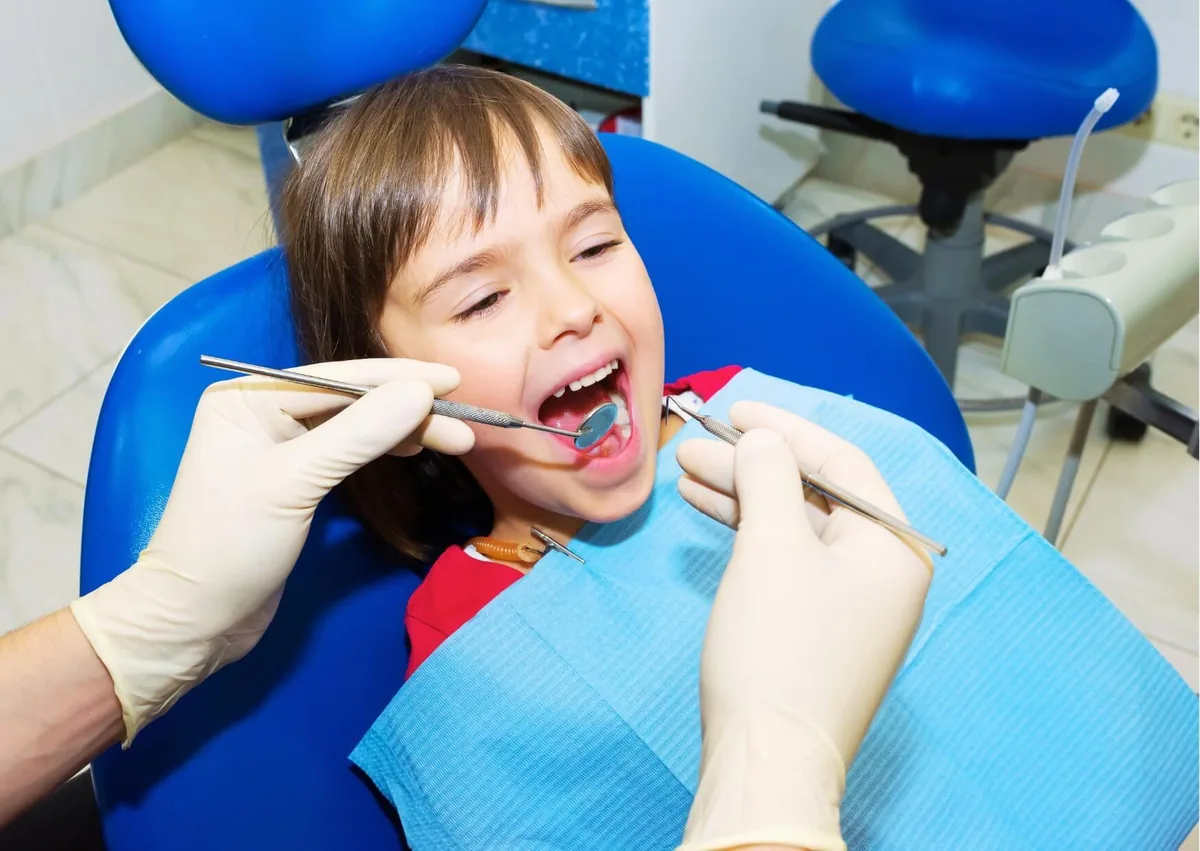
After the first appointment, many children are seen about every six months. The best timing depends on cavity risk, oral hygiene, diet, fluoride exposure, and whether there are developmental or habit-related concerns.
These visits often include a gentle professional dental cleaning and are part of routine dental check-ups. Some children benefit from more frequent follow-up, especially if they have already had decay, enamel weakness, or trouble keeping teeth clean.
Preventive care works best when the schedule matches the child's actual risk, not just a standard calendar.
Start cleaning the mouth early. Even before teeth erupt, wiping the gums after feeding can help build oral hygiene habits, and once teeth appear, they should be brushed gently every day.
One of the biggest drivers of early decay is frequent sugar exposure over time, especially when sweet drinks or milk sit on the teeth for long periods. Falling asleep with a bottle, constant sipping, and frequent sticky snacks can all raise cavity risk.
If you want to understand the effects of poor oral hygiene, read about what can happen when you don't brush teeth. Ask the dentist what kind of fluoride exposure makes sense for your child.
Fluoride treatment helps strengthen enamel and lower the chance of cavities. The right approach depends on your child's age, cavity risk, and local water supply.
It also helps to keep expectations realistic. Some children cooperate easily, while others need a few visits to get comfortable, and that is completely normal.
If your child is already a toddler or older and has not seen a dentist yet, it is still a good time to schedule. There is no benefit to waiting longer once teeth are present.
The visit can establish a baseline, check for hidden decay, and answer questions about spacing, bite, brushing struggles, or habits like thumb sucking. Most importantly, it gives you a clear plan based on your child's current needs rather than guesswork.
If you are unsure whether a symptom is urgent or whether it can wait for a routine appointment, a dental office can often help you decide by phone. That is usually the best next step when the timing is unclear.
For pediatric dentistry at AR Smiles in Fairlawn, OH, serving families from Akron and Copley, call (330) 835-1000 to schedule your child's visit.
Yes, for ideal prevention it is later than recommended, but it is not too late to start. A visit now can still catch problems early and help prevent future decay.
That is still enough reason to book the first appointment. Even one tooth can develop decay, and the visit is mainly about prevention and guidance.
Yes. Baby teeth support eating, speech, comfort, and the position of future adult teeth, and untreated decay can cause pain or infection.
Usually no. Pediatric dental visits are designed for young children, including infants and toddlers who cannot sit still for long.
Call sooner if there is pain, swelling, a broken tooth, discoloration, bleeding that keeps returning, or any mouth injury that worries you. If symptoms are severe, worsening, or paired with fever or facial swelling, seek urgent care.