
Menu
- Home
- About Us
- Services
- Dental Savings Plan
- Patient Resources
- Success Stories
- Gallery
- Contact Us
close
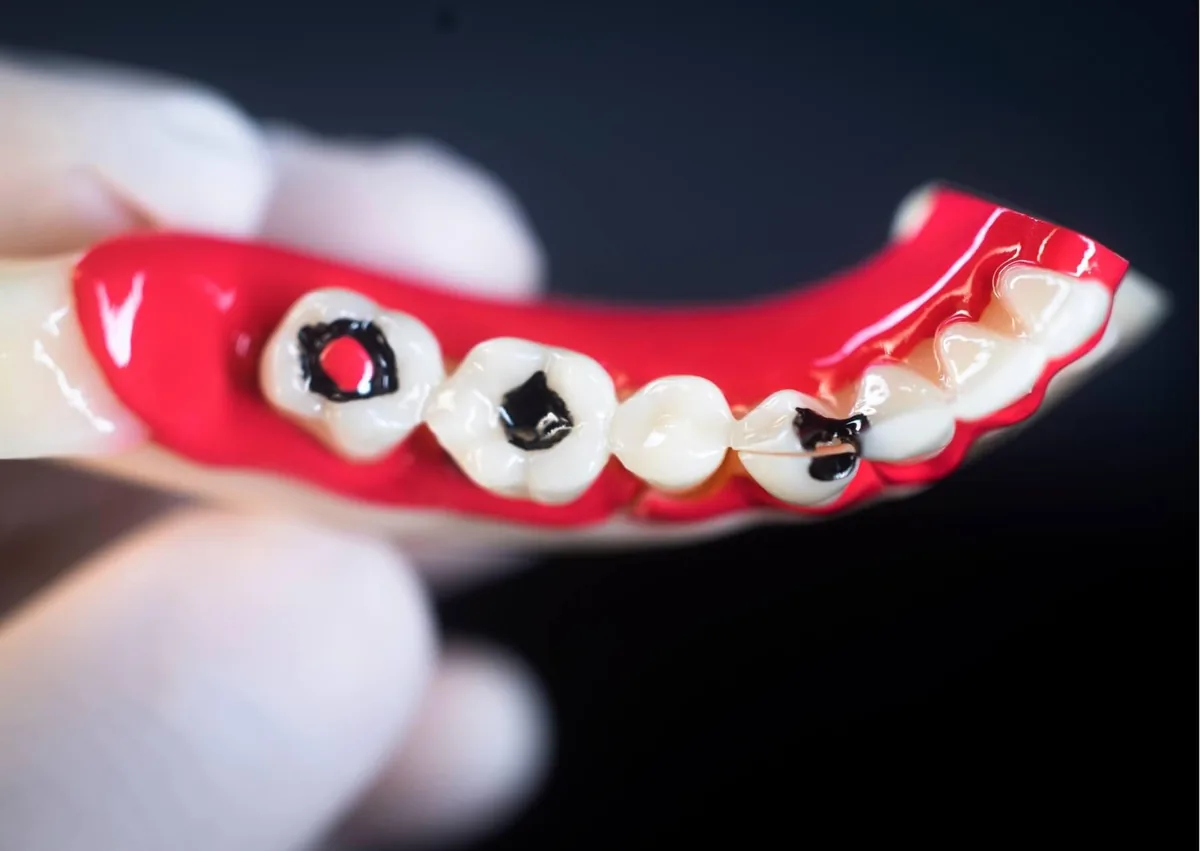
Cavities can look like white, brown, or black spots, rough areas, small pits, or visible holes in a tooth. But early decay is often hard to see, and stains or deep grooves can look similar, so a dental exam is the most reliable way to tell the difference.
If you have noticed a new spot, pit, or unexplained sensitivity, a dental exam can help determine whether it is decay, staining, or another tooth problem. At AR Smiles in Fairlawn, OH, we explain what the finding means and recommend the least invasive way to protect your natural tooth structure.
A cavity starts when acids made by bacteria pull minerals out of enamel, the hard outer layer of the tooth. The earliest visible change may be a chalky white area that looks dull or matte compared with the surrounding enamel.
As decay progresses, the area may turn tan, brown, or black. It may also become rough, form a small pit, or develop into a visible hole. Color alone does not confirm an active cavity.
For example, a dark groove may be a stain rather than decay, which is why appearance is only part of the picture. For more on how quickly these changes can happen, see cavity formation.
Cavities between teeth usually cannot be seen at home. Dentists often detect them with an exam and bitewing X-rays, which help show decay in areas hidden where teeth touch. For more about this location, see cavity between teeth.
Decay near the gumline may look like a discolored notch or a soft area. If gum recession exposes the root surface, that area can decay faster because it is less protected than enamel.
Many cavities do not hurt at first. Symptoms often begin only after decay reaches deeper layers of the tooth.
Possible signs include:
For more detail about symptoms, see what a cavity feels like.
Symptoms do not always show how deep the decay is. A tooth can have significant decay without pain, and sensitivity can also come from gum recession, enamel wear, or a cracked tooth.
Not every dark spot is a cavity. Surface stains often collect in the grooves of molars and can look suspicious even when no decay is present.
Tartar may appear yellow, brown, or black near the gums. It is a hardened plaque on the tooth, not a cavity, though it still needs professional removal.
Some teeth also have harmless white or brown enamel variations. A dentist may use visual inspection, a careful exam, and X-rays when needed to tell whether a spot is decay, staining, tartar, or a developmental enamel mark.
Trying to scrape or probe a suspicious area at home is not a good idea. It can damage the tooth or irritate the gums without telling you whether decay is actually present.
Treatment depends on where the cavity is and how deep it goes. Very early mineral loss without a hole may sometimes be managed with fluoride treatment, better plaque removal, diet changes, and monitoring.
Once decay creates a hole, the tooth cannot replace that missing structure on its own. A dentist may recommend tooth-colored fillings, and deeper damage may require a crown, root canal treatment, or removal if the tooth cannot be restored.
Earlier treatment usually means a simpler repair and more natural tooth structure preserved. Waiting until a tooth hurts can allow decay to reach the pulp, where the tooth's nerves and blood vessels are located.
Brush twice a day with fluoride toothpaste and clean between your teeth daily with floss or another dentist-recommended tool. Pay extra attention to molar grooves, the gumline, and areas around fillings, crowns, braces, or removable appliances.
Frequent exposure to sugar and refined carbohydrates gives cavity-causing bacteria more chances to make acid. How often you snack or sip sweet drinks can matter as much as how much you consume.
Regular dental visits help catch subtle changes early. Depending on your risk, a dentist may also recommend fluoride treatment, sealants for deep molar grooves, and a personalized recall schedule as part of ongoing preventive dentistry.
To learn more about sealants, see sealing teeth.

Schedule a dental visit if you notice a new spot, pit, rough area, or sensitivity that does not make sense or does not go away. It is especially important to get checked if you have pain when biting, a broken tooth, or a hole that traps food.
Seek urgent dental or medical care for facial swelling, fever, difficulty swallowing or breathing, swelling near the eye, or rapidly worsening pain. These symptoms may point to a spreading infection and should not wait for a routine visit.
Because cavities can be hidden or painless, professional evaluation is the safest next step when you are unsure what you are seeing. A timely exam can show whether the area is decay, staining, or another dental problem and help guide the least invasive treatment.
The next step is a focused dental exam to confirm whether the area needs a filling, fluoride therapy, or simple monitoring. Call AR Smiles for dental cleanings and exams in Fairlawn, OH, and nearby Akron and Bath at (330) 835-1000 to schedule a visit.
Yes. Early enamel decay may appear as a dull, chalky white area caused by mineral loss, especially near the gumline or around braces.
No. Black or brown areas may be stains, tartar, old fillings, or natural discoloration in deep grooves, but some do represent decay and need an exam.
Usually not without dental imaging. Cavities between teeth often stay hidden until they become larger, which is why a dentist may recommend bitewing X-rays based on symptoms, exam findings, and cavity risk.
No. A cavity can create a visible hole before it causes pain, and symptoms may not start until decay reaches deeper layers of the tooth.
Early mineral loss without a physical hole may sometimes be stopped or partly reversed with fluoride and risk-factor changes. For more detail, see small cavities heal.