
Menu
- Home
- About Us
- Services
- Dental Savings Plan
- Patient Resources
- Success Stories
- Gallery
- Contact Us
close
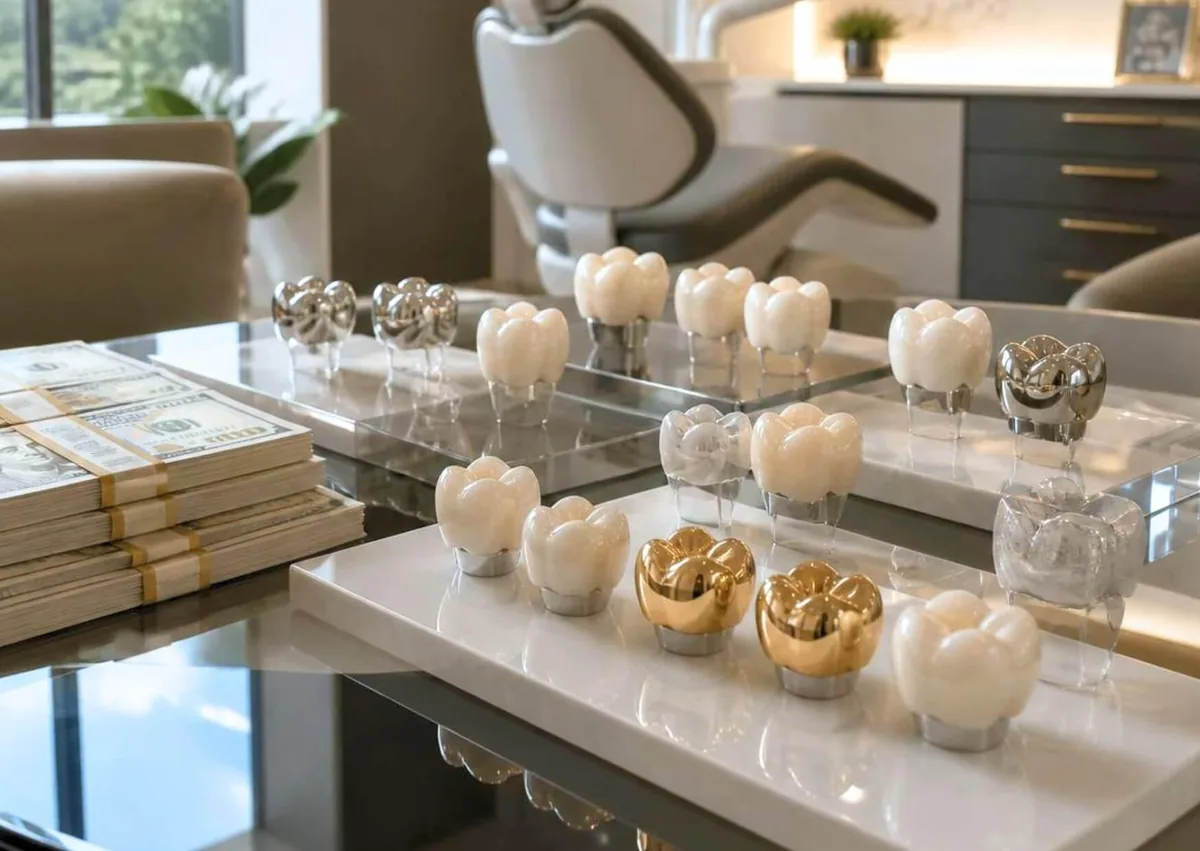
If you need a crown, the main question is usually which type lasts well and what it will cost. In the United States, dental crowns often cost about $800 to $2,500 per tooth before insurance, and the best choice depends on the tooth’s location, appearance goals, bite pressure, and how much healthy tooth remains.
If you're weighing crown options because of a cracked or heavily filled tooth and want to minimize appointments, same-day crowns can simplify the process. At AR Smiles in Fairlawn, OH, same-day crowns let you leave with a durable custom restoration the same day, reducing temporary crowns and follow-up visits.
A dental crown is a custom covering that protects and restores a damaged or weakened tooth. The ranges below are broad self-pay estimates per tooth before insurance and may not include exams, X-rays, buildup procedures, root canal treatment, gum treatment, sedation, or old crown removal.
|
Crown Type |
Typical Self-Pay Range |
Common Advantages |
Important Limitations |
|---|---|---|---|
|
Porcelain or ceramic |
$1,000 to $2,500 |
Natural appearance; often used for visible teeth |
May chip or fracture; strength varies by ceramic |
|
Zirconia |
$1,000 to $2,500 |
Strong; tooth-colored; often suitable for back teeth |
Appearance and fit depend on design and fabrication |
|
Porcelain-fused-to-metal |
$900 to $2,000 |
Combines a metal base with tooth-colored porcelain |
Porcelain can chip; a dark edge may show near the gum |
|
Metal or gold alloy |
$900 to $2,500 or more |
Durable; may require less tooth reduction in some cases |
Metallic appearance; precious metal prices can raise cost |
|
Resin or composite |
$600 to $1,500 |
Often less expensive; tooth-colored |
Usually less resistant to wear, staining, and fracture |
These numbers are estimates, not quotes. Local fees, lab charges, material choice, case complexity, and the dentist’s training all affect the final total.
Broad crown costs reported by a university dental source fall in a similar general range, but office-specific estimates still vary.
Porcelain and ceramic crowns are popular when appearance matters most. They can closely match natural enamel and are commonly used on front teeth.
Many ceramic options are available as metal-free crowns, which avoid a metal substructure and can create a more natural look in visible areas.
Zirconia is a strong ceramic often chosen for teeth that handle heavier chewing forces. It can also work in visible areas, but shade, translucency, thickness, and design all affect the final result.
Porcelain-fused-to-metal crowns use a metal base covered by porcelain. They have a long track record, but the porcelain can chip and the metal edge may become visible if the gums recede.
Metal crowns, including gold and other dental alloys, are highly durable but more noticeable. Resin crowns usually cost less, but they tend to wear faster and may be better suited to limited situations than as the best long-term option.
The crown itself is only part of the total fee. Ask for a written estimate that separates the crown from any added procedures, such as decay removal, replacing a large filling, or placing a core buildup.
A root canal may be needed if the pulp inside the tooth is irreversibly inflamed or infected. However, a crown does not automatically mean you need a root canal.
Cost also changes based on whether the crown is made by a dental lab or with in-office digital equipment used for same-day crowns. Temporary crowns, specialist involvement, local pricing, and precious metal costs can also affect the final fee.
Dental insurance may cover part of the treatment after the deductible. Many plans also have waiting periods, annual maximums, material limits, or replacement rules, so it helps to confirm the allowed amount and your expected share before treatment starts.
A dentist may suggest a crown for a tooth weakened by a large filling, fracture, extensive decay, or root canal treatment. Crowns can also restore severely worn or misshapen teeth and may be used as the visible restoration on an implant, which can involve prosthodontics in more complex cases.
Common warning signs include pain when biting, temperature sensitivity, a visible crack, a loose restoration, or repeated breakage around a large filling. These signs do not always mean a crown is the only answer, because a filling, onlay, root canal, extraction, or monitoring may sometimes be more appropriate.
The dentist usually checks the tooth, gums, bite, and X-rays before recommending treatment. How much healthy tooth remains and whether a crack extends below the gum or into the root can determine whether the tooth can be restored predictably.
Traditional crown treatment often takes two visits. At the first visit, the dentist numbs the area, removes weak or decayed tooth structure, shapes the tooth, takes a scan or impression, and places a temporary crown.
At the second visit, the final crown is checked for fit, bite, and appearance before it is cemented. Some offices can complete certain cases in one visit with same-day crowns, which may reduce the need for a temporary crown and a return trip.
Same-day treatment is not right for every tooth or every material. Neither same-day nor lab-made crowns are automatically better in every case.
Mild gum tenderness or temperature sensitivity can happen after treatment. Contact the dentist if the bite feels off, the crown feels loose, pain gets worse, or sensitivity does not improve.
Brush twice a day with fluoride toothpaste and clean between the teeth daily. The crown itself cannot get a cavity, but the tooth at the margin still can.
Avoid chewing ice or using your teeth to open packages. If you clench or grind, a night guard may help protect the crown and nearby teeth.
Before treatment, ask which material is being recommended, why it fits that tooth, what the estimate includes, and what alternatives are reasonable. It is also smart to ask about remake policies, insurance preauthorization, and likely maintenance needs, while understanding that no crown has a guaranteed lifespan.
Schedule a dental evaluation for persistent pain, a cracked tooth, a loose crown, recurring sensitivity, swelling, or a bad taste near the tooth. Prompt care may prevent more damage and can show whether the problem involves the crown, the tooth underneath, the gums, or the bite.
Seek urgent dental or medical care for facial swelling, fever with dental pain, pus drainage, rapidly worsening symptoms, or trouble opening the mouth. Difficulty breathing or swallowing needs emergency care, especially if swelling is spreading into the face or neck.
A clinical exam and appropriate imaging are the safest way to compare crown materials, total costs, and alternatives for a specific tooth. Bringing your insurance details and asking for an itemized estimate can make the financial discussion much clearer.
To confirm whether same-day crowns are right for your tooth and get an itemized estimate, arrange a short evaluation with a restorative dentist. Call AR Smiles about same-day crowns in Fairlawn, OH, serving nearby Copley and Bath, or book an appointment at (330) 593-2500.
There is no single best crown material for every tooth. Ceramic may offer the best appearance, while zirconia and metal may provide more strength, and the right choice depends on tooth position, bite, space, cosmetic goals, and clinical findings.
Resin crowns are often among the least expensive options. However, they may wear or break sooner, so the lowest upfront price may not be the lowest long-term cost.
Many crowns last about 5 to 15 years, and some last much longer. For more detail, see how long crowns last.
Material, fit, oral hygiene, decay risk, grinding, diet, and the condition of the supporting tooth all affect longevity.
Many dental plans cover part of a crown when it is considered medically necessary. Coverage often depends on the deductible, coinsurance, waiting period, annual maximum, and replacement rules.
Cosmetic treatment or upgraded materials may receive limited or no coverage.
Small surface defects can sometimes be smoothed or repaired. Loose crowns, major fractures, decay underneath, or poor fit often require replacement.
A dentist needs to examine the crown and the supporting tooth to decide whether repair will be safe and durable.