
Menu
- Home
- About Us
- Services
- Dental Savings Plan
- Patient Resources
- Success Stories
- Gallery
- Contact Us
close
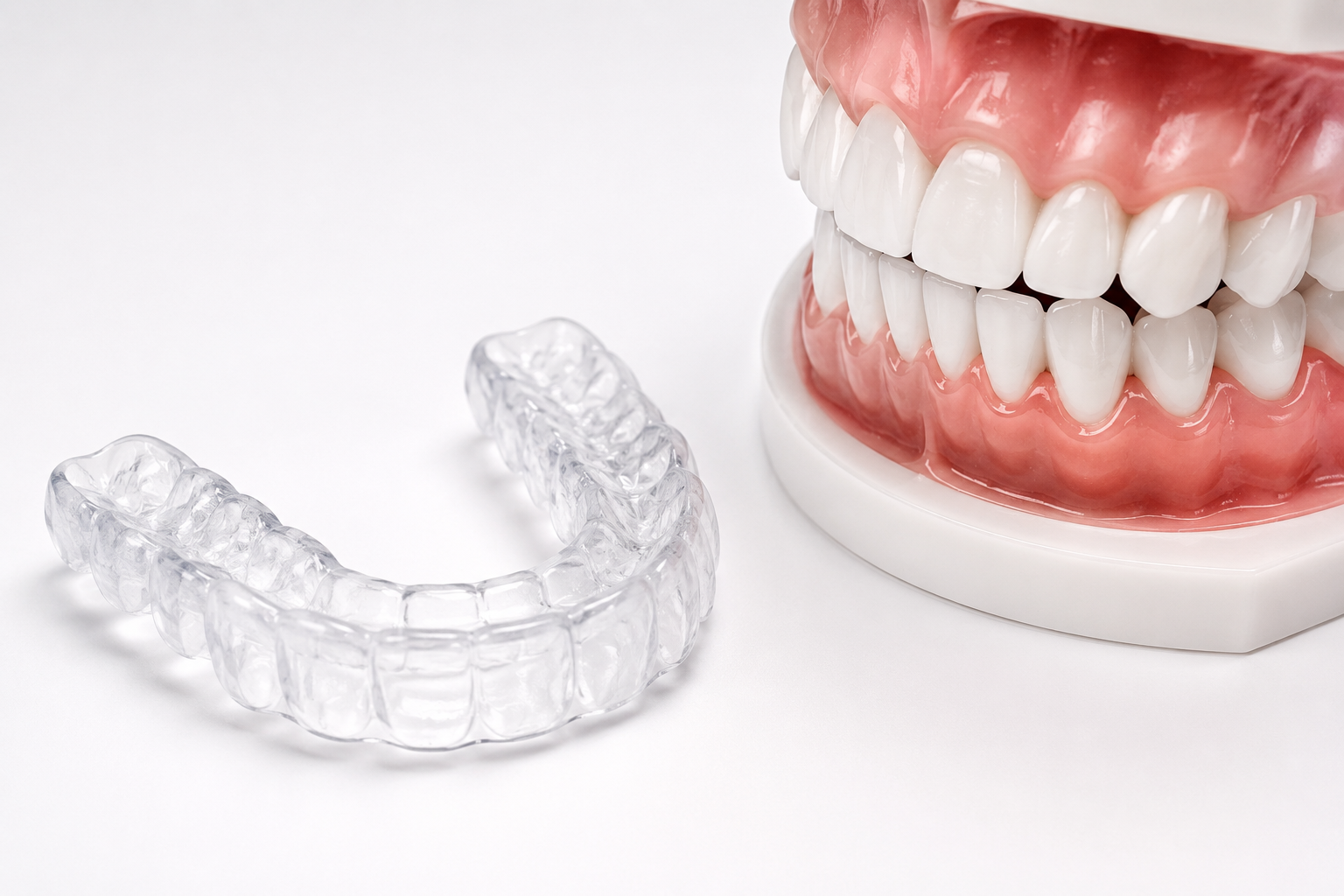
Nightguards for teeth grinding protect enamel and reduce pressure on the jaw by creating a barrier between upper and lower teeth. Arsmiles Family & Cosmetic Dentistry uses customized solutions to help patients manage grinding patterns and prevent long-term damage, often starting with a protective occlusal sports guard when early signs appear.
Teeth grinding, also called bruxism, may occur during sleep or periods of stress, and it often develops gradually before noticeable symptoms appear.
Teeth grinding develops when jaw muscles contract repeatedly under stress, misalignment, or sleep-related conditions.
Common causes include:
If bite alignment contributes to grinding, then corrective options such as orthodontics or clear aligner treatment may be evaluated alongside nightguard use.
Bruxism presents in two distinct forms, and treatment approach depends on when the activity occurs.
Example: Patients with disrupted sleep patterns may grind without awareness, leading to progressive enamel loss.
Example: Office workers may clench during focused tasks without realizing it.
If grinding occurs mainly during sleep, then a nightguard is typically recommended. If clenching occurs during the day, then behavioral awareness and muscle relaxation strategies may be added.
For clinical classification and contributing factors, refer to the National Institutes of Health overview on bruxism and its causes
Nightguards reduce damage by distributing bite force evenly across the dental arch.
They work through three primary mechanisms:
For example, a patient grinding at night may generate forces up to 250 pounds of pressure. A nightguard helps disperse this load to minimize localized damage.
Nightguards are typically recommended when physical signs of grinding or clenching are present.
Watch for:
If you are noticing enamel wear or repeated dental damage, then protective intervention becomes more important to prevent structural complications.
Nightguards protect teeth but do not treat the root cause of bruxism.
They do not:
If jaw pain, clicking, or locking occurs, then evaluation for TMD treatment may be necessary to address joint-related issues beyond surface protection.
Nightguards vary in effectiveness based on fit, material, and customization level.
If long-term protection is needed, then custom guards are typically recommended because they reduce uneven pressure and improve comfort.
Nightguard effectiveness depends on material selection, which is based on grinding intensity and bite characteristics.
If grinding force is high, then hard acrylic guards are typically recommended. If comfort is a concern with mild symptoms, then soft or dual-layer options may be considered.
Material selection is usually determined after evaluating bite force patterns, tooth wear severity, and jaw alignment.
Untreated teeth grinding can lead to progressive structural and functional damage.
Potential outcomes include:
Severe wear may eventually require restorative procedures such as metal-free crowns to rebuild tooth structure.
For additional clinical context on grinding causes and risks, refer to the American Dental Association’s resource on teeth grinding (bruxism).
Nightguards are protective, while other treatments address underlying causes.
| Treatment Type | Purpose | Best For |
| Nightguard | Protects enamel | Active grinding |
| Orthodontics | Corrects bite alignment | Misaligned teeth |
| TMD therapy | Addresses joint dysfunction | Jaw pain or clicking |
| Stress management | Reduces muscle tension | Stress-related clenching |
If grinding is caused by alignment issues, then combining nightguards with orthodontic care may provide better long-term outcomes.
Custom nightguards are designed using precise diagnostic data to match bite dynamics.
The process typically includes:
Advanced diagnostics, such as digital X-rays, may support evaluation of underlying bone and joint structures.
Nightguards last longer when cleaned and stored properly.
Follow these steps:
Regular dental visits help monitor wear and ensure the appliance continues to fit correctly.
Nightguards typically last 1 to 5 years depending on material and grinding intensity. Heavy grinders may need replacement sooner.
Nightguards do not stop grinding but reduce damage and pressure. Additional treatments may be needed for underlying causes.
Teeth grinding can still cause damage even without pain. Enamel wear and fractures may develop silently.
Children may use nightguards in certain cases, but evaluation depends on growth and dental development. Pediatric assessment is recommended.
Teeth grinding can gradually affect enamel, jaw muscles, and joint function over time. The cause may involve stress, bite imbalance, or sleep-related patterns, and each factor influences how treatment is planned.
If you are noticing worn teeth, jaw soreness, or frequent headaches, then a protective solution may help reduce ongoing damage. If this applies to you, a personalized evaluation at Arsmiles Family & Cosmetic Dentistry can help determine whether a nightguard, bite correction, or joint-focused care is appropriate.
To better understand your condition and explore the right approach, you can request a consultation based on your symptoms and treatment goals.